
4 Things They Don’t Tell You When You Shop
for a Crawl Space Dehumidifier
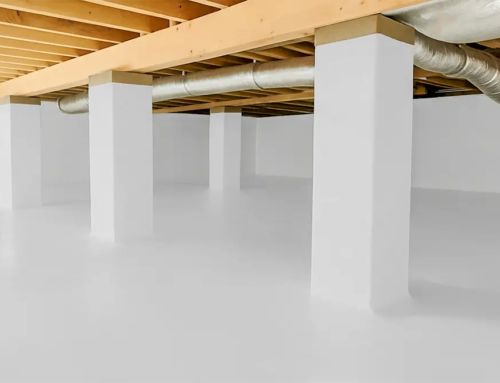
Photo Credit Delmarva Crawl Space Solutions
Most companies that sell dehumidifiers know little about how they work or how to properly install them. The manufacturer wants to make the purchase decision as easy as possible, so you might see this dehumidifier or that dehumidifier rated for xx square feet, while another size dehumidifier is rated for a bigger or smaller space. So how do you purchase a dehumidifier that will not only keep the humidity down but also last a full 8-10 years?
1. Size
Just like an air-conditioning unit, getting the correct size dehumidifier for your space is a key factor in how well it performs. If you get too big of a dehumidifier, then it will turn on and off too often, but if you get one too small, it will never turn off. The right size for the space is the biggest factor in how long the dehumidifier will last in a crawl space and how well it will perform. We explain this in more detail below. The larger dehumidifiers cost more to buy, use more energy to run, and impact your power.
2. Heat
Is getting the biggest dehumidifier I can afford the best option? No, it is not. When a dehumidifier is running in the crawl space, the compressor and the condenser give off heat as part of the process. The amount of heat it gives off makes the air exiting the unit warmer than the air in the crawl space. If the space is already humid, then adding more heat is a bad idea. The larger the dehumidifier, the more heat it will give off, and the smaller the crawl space, the more that heat will impact the space. The other problem with giving off heat in a small space is that when that heat builds up, it will affect the relative humidity percentage in the crawl space. Relative humidity is relative to dew point temperature and air temperature. If you raise or lower either one, you will change the RH%. For example, if the dew point temperature is 50ºF and the air temperature is 65ºF, you have an RH% of 60%. If you heat the air to 70ºF and keep the dew point at 50ºF, then the RH% drops to 50%, but you still have not removed any moisture from the air. Having a dehumidifier that is too large in a small space will trick it into thinking it has done its job, and it will then shut off without having removed the necessary moisture. This will result in short cycles of run time and prematurely age the appliance.
3. Airflow
Many customers are sold a bigger capacity dehumidifier because it is going into a bigger space. They visualize that there must be more moisture because there is more square footage in the crawl space. However, this is not the best approach. A smaller unit like a 70 pint has enough removal capacity to do most crawl spaces; it’s the airflow of the fan and other restrictors that make it ineffective. A 70 pint dehumidifier can remove 8.75 gallons of water from the air per day. That is almost two 5-gallon buckets of water. Once the initial wetness from the wood and block structure is removed within the first 2 weeks, the space will no longer require a dehumidifier of that size. If a crawl space is properly sealed or encapsulated, the moisture removal demand will drop significantly. By implementing fan support like the FanPak™ for the Moisture Medic®, you can increase the dehumidifier’s reach across the crawl space and get more for your money by purchasing a smaller dehumidifier but getting the moisture out. The FanPak™ turns on and off with the dehumidifier to limit wear and tear on the fans. When the moisture in the crawl space reaches the setting on the control panel, the fans turn on and move the stale air towards the Moisture Medic® to be removed. To select the properly sized dehumidifier, you will calculate the square footage of your crawl space and then multiply that number by the average height. So if the crawl space is 20 feet wide and 50 feet long, that is 1000 square feet. The average height is 4’, so 4 x 1000 is 4000 cubic feet. The fan on the 70 pint dehumidifier Moisture Medic® (for this example) is 200 CFM (cubic feet per minute). We take the 4000 cubic feet of air and divide by the 200 CFM to get 20 minutes. This means that this 70 pint dehumidifier will turn this air volume over one time every 20 minutes. The target for a healthy crawl space is to turn the air over 2-3 times per hour. Every 20 minutes is perfect for a three-time turnover. If you have a larger space or a taller space, then the FanPak™ can make up the difference.
4. Placement
The most common place to install a dehumidifier in a crawl space is in the center. It doesn’t matter if a contractor installed it or a homeowner did. Even if this method is not wrong, there is a better way to do it. Imagine the crawl space is a rectangle; let’s use the example above and say the space is 20’ x 50’. By putting the dehumidifier in the center of the crawl space, it is now the closest to all areas we need to lower the moisture. The reason this approach is not the best way is because the area you should protect from the moisture is in the center of your crawl space, and this method allows the moist air to move across the entire space before it is handled by the dehumidifier. We want to dry the air before it makes its way too far into the space. I recommend installing the dehumidifier about 4-5 feet from the foundation wall on the back half of the crawl space from the access door. In this configuration, you can and should add some fans; in this size space, one FanPak™ will effectively circulate the air in a racetrack pattern around the foundation. This way, your dehumidifier will sense moisture as it enters the space from the foundation and use the fans to help blow air around the perimeter to collect it for drying. The fans not only help move the air around the crawl space, but they also disperse the heat given off of the dehumidifier, allowing it to run longer, more productive cycles. The fans significantly enhance the performance of the dehumidifier. It should be noted that this method works best with a sealed or encapsulated crawl space.
4 Things They Don’t Tell You When You Shop for a Crawl Space Dehumidifier
Photo Credit Delmarva Crawl Space Solutions
Most companies that sell dehumidifiers know little about how they work or how to properly install them. The manufacturer wants to make the purchase decision as easy as possible, so you might see this dehumidifier or that dehumidifier rated for xx square feet, while another size dehumidifier is rated for a bigger or smaller space. So how do you purchase a dehumidifier that will not only keep the humidity down but also last a full 8-10 years?
1. Size
Just like an air-conditioning unit, getting the correct size dehumidifier for your space is a key factor in how well it performs. If you get too big of a dehumidifier, then it will turn on and off too often, but if you get one too small, it will never turn off. The right size for the space is the biggest factor in how long the dehumidifier will last in a crawl space and how well it will perform. We explain this in more detail below. The larger dehumidifiers cost more to buy, use more energy to run, and impact your power.
2. Heat
Is getting the biggest dehumidifier I can afford the best option? No, it is not. When a dehumidifier is running in the crawl space, the compressor and the condenser give off heat as part of the process. The amount of heat it gives off makes the air exiting the unit warmer than the air in the crawl space. If the space is already humid, then adding more heat is a bad idea. The larger the dehumidifier, the more heat it will give off, and the smaller the crawl space, the more that heat will impact the space. The other problem with giving off heat in a small space is that when that heat builds up, it will affect the relative humidity percentage in the crawl space. Relative humidity is relative to dew point temperature and air temperature. If you raise or lower either one, you will change the RH%. For example, if the dew point temperature is 50ºF and the air temperature is 65ºF, you have an RH% of 60%. If you heat the air to 70ºF and keep the dew point at 50ºF, then the RH% drops to 50%, but you still have not removed any moisture from the air. Having a dehumidifier that is too large in a small space will trick it into thinking it has done its job, and it will then shut off without having removed the necessary moisture. This will result in short cycles of run time and prematurely age the appliance.
3. Airflow
Many customers are sold a bigger capacity dehumidifier because it is going into a bigger space. They visualize that there must be more moisture because there is more square footage in the crawl space. However, this is not the best approach. A smaller unit like a 70 pint has enough removal capacity to do most crawl spaces; it’s the airflow of the fan and other restrictors that make it ineffective. A 70 pint dehumidifier can remove 8.75 gallons of water from the air per day. That is almost two 5-gallon buckets of water. Once the initial wetness from the wood and block structure is removed within the first 2 weeks, the space will no longer require a dehumidifier of that size. If a crawl space is properly sealed or encapsulated, the moisture removal demand will drop significantly. By implementing fan support like the FanPak™ for the Moisture Medic®, you can increase the dehumidifier’s reach across the crawl space and get more for your money by purchasing a smaller dehumidifier but getting the moisture out. The FanPak™ turns on and off with the dehumidifier to limit wear and tear on the fans. When the moisture in the crawl space reaches the setting on the control panel, the fans turn on and move the stale air towards the Moisture Medic® to be removed. To select the properly sized dehumidifier, you will calculate the square footage of your crawl space and then multiply that number by the average height. So if the crawl space is 20 feet wide and 50 feet long, that is 1000 square feet. The average height is 4’, so 4 x 1000 is 4000 cubic feet. The fan on the 70 pint dehumidifier Moisture Medic® (for this example) is 200 CFM (cubic feet per minute). We take the 4000 cubic feet of air and divide by the 200 CFM to get 20 minutes. This means that this 70 pint dehumidifier will turn this air volume over one time every 20 minutes. The target for a healthy crawl space is to turn the air over 2-3 times per hour. Every 20 minutes is perfect for a three-time turnover. If you have a larger space or a taller space, then the FanPak™ can make up the difference.
4. Placement
The most common place to install a dehumidifier in a crawl space is in the center. It doesn’t matter if a contractor installed it or a homeowner did. Even if this method is not wrong, there is a better way to do it. Imagine the crawl space is a rectangle; let’s use the example above and say the space is 20’ x 50’. By putting the dehumidifier in the center of the crawl space, it is now the closest to all areas we need to lower the moisture. The reason this approach is not the best way is because the area you should protect from the moisture is in the center of your crawl space, and this method allows the moist air to move across the entire space before it is handled by the dehumidifier. We want to dry the air before it makes its way too far into the space. I recommend installing the dehumidifier about 4-5 feet from the foundation wall on the back half of the crawl space from the access door. In this configuration, you can and should add some fans; in this size space, one FanPak™ will effectively circulate the air in a racetrack pattern around the foundation. This way, your dehumidifier will sense moisture as it enters the space from the foundation and use the fans to help blow air around the perimeter to collect it for drying. The fans not only help move the air around the crawl space, but they also disperse the heat given off of the dehumidifier, allowing it to run longer, more productive cycles. The fans significantly enhance the performance of the dehumidifier. It should be noted that this method works best with a sealed or encapsulated crawl space.